First Letter
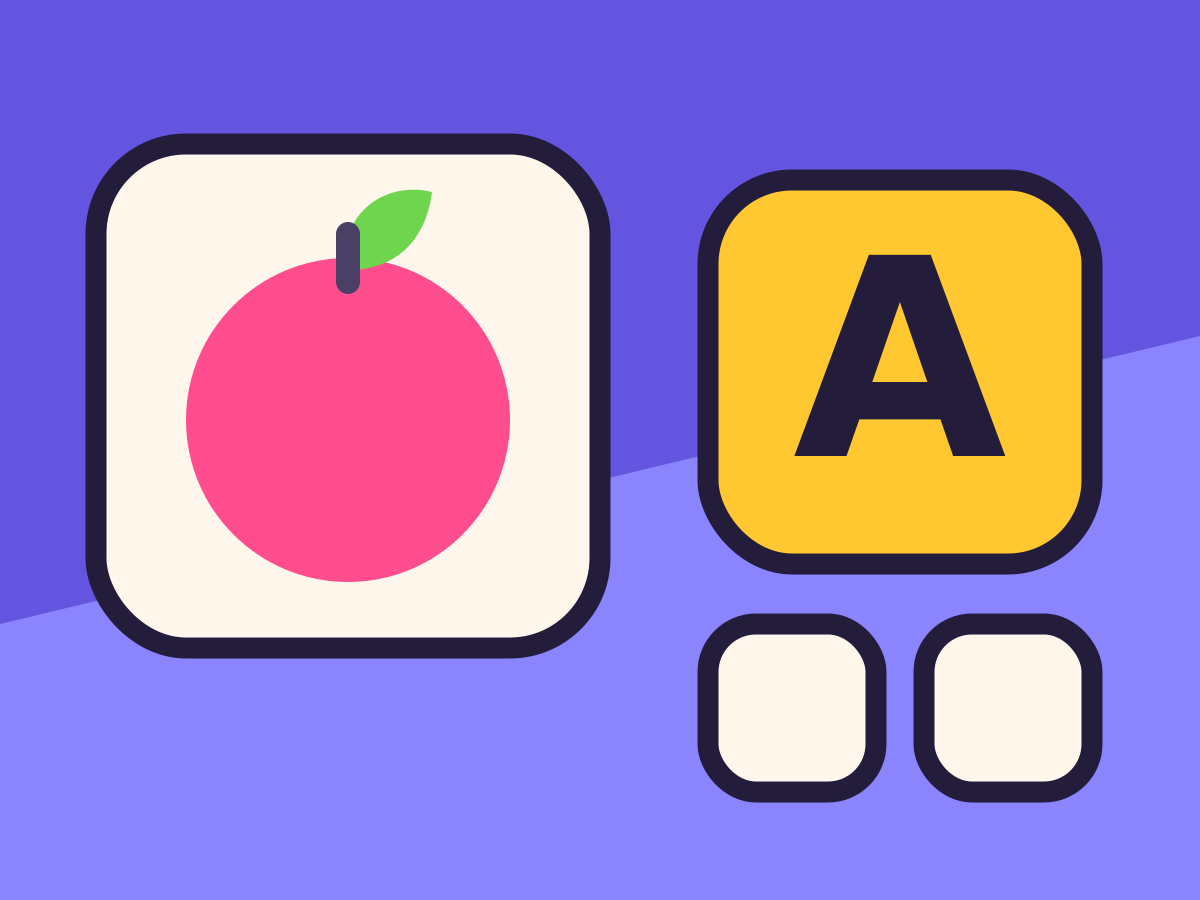
A free alphabet game where a picture appears and your child taps the letter its word begins with. Show a banana, tap B. The letters can be Hebrew, English or Spanish, switched inside the game itself.
- Free
- No ads
- No account
- No download
- Works offline
- Single player
How do you play?
- Look at the picture - One big picture appears. Say to yourself what it is.
- Find the first letter - Which letter does its name start with? Tap it from the row below.
- Pick a level - Two, three or four letters to choose between, with a wider range of pictures as you climb.
- Switch language - The language button flips the letters between Hebrew, English and Spanish anytime.
About this game
A picture shows up. What does its word start with? Tap the letter.
There are 74 pictures, from dog and cat and home to giraffe and helicopter, and the word itself is never written down. That matters. Reading the word would hand over the answer, so a child has to name the picture in their own head first and then find the sound it opens with. This is the step before reading rather than reading itself, which is why it works for a four-year-old who knows their letters but cannot yet read a whole word off the page.
Difficulty moves two things at once. Easy shows 2 letters to choose between, and its pictures are the 22 simplest everyday words, dog, cat, home, car. Medium shows 3, the ordinary version of the game. Hard shows 4 and pulls from the whole pool, so the vocabulary widens exactly as the guessing gets harder.
The letters can be a different language from the app, and that is the part worth having. A Hebrew-speaking child can practise the English alphabet while every menu around them stays in Hebrew, and an English speaker can try Spanish for a while. The pool starts words with 19 different letters in Hebrew, 19 in English and 23 in Spanish, so it is real coverage rather than the same five letters on a loop.
A wrong tap does nothing harsh. The letter dims, the picture gives a small shake, and the same picture waits for another go. There is no clock and no way to lose. Correct answers keep arriving, the count climbs, and the best run for each language and level is kept for next time.
What does it teach?
Phonemic awareness
Hearing the first sound of a word is the direct groundwork for reading and spelling.
Letter to sound
Matching a letter's shape to the sound it makes is exactly what gets practised, picture after picture.
Naming things
Finding a first letter means knowing what the thing is called first, so vocabulary grows along the way.
A second alphabet
A child who already knows one language's letters meets new shapes for sounds they already own.
Tips
Say the name out loud
Before hunting for a letter, say the picture's name aloud. The first sound often jumps out on its own.
Use the speaker
When sound is on, the speaker button says the word in the letters' language. Hear banana, look for B.
Start on easy
Two letters is not less learning, it is less guessing. A young child learns more while getting it right often.
Practise a second alphabet
The same picture opens with a different letter in each language. A car is C in English, מ in Hebrew. That is the most natural way into a new alphabet.
What age is it for?
3 to 4
Easy level, two letters. Knowing a handful of letters is enough to enjoy it.
5 to 6
Three letters, and the age where the first sound of most words is already audible on its own.
7 and up
Four letters, and the time to add a second language from the language button.
Adults
A gentle way to teach a child a foreign alphabet, with the grown-up knowing the words and the child the letters.
Accessibility
One tap on a letter, with no dragging and no holding. The letters are large and well spaced, so an imprecise tap still lands on the right one. The picture is the question, never the sound, so the game is fully playable in silence. Anyone who wants it can press the speaker and hear the word, but nothing depends on that. There is no clock on the answer, so a child can think as long as they need before each tap. A wrong answer only dims that letter and leaves the same picture up, so there is no punishment and no way to lose.
Playing together
Guess together
The grown-up names the picture, the child finds the letter. Then swap over.
Hunt around the room
After a letter, find one more thing nearby that starts with it. The game carries on away from the screen.
Two languages
Play a round in English, then the same theme in Spanish. Same pictures, different letters.
Draw the letter
Trace the chosen letter in the air before tapping. The hand helps the memory.
Common questions
Is the game free?
Completely. Nothing to pay and no purchases inside the game, and every game on the site is open from the first second.
Do I need to download or sign up?
No to both. It runs in the browser with no download and no account, and we never ask for an email.
My child cannot read yet, is that okay?
That is exactly who it is built for. The word is never written, so a child only has to recognise a picture and find its first sound, which is the step before reading.
Which languages are there?
Hebrew, English and Spanish. The language button switches the letters at any moment without changing the site language, so a child can practise a foreign alphabet.
How many pictures are there?
74 pictures, and easy mode uses the 22 simplest. They start with 19 different letters in Hebrew, 19 in English and 23 in Spanish, so the alphabet is well covered.
What happens on a wrong answer?
The letter dims and the picture gives a small shake, and the same picture stays up for another try. No score drops and there is no losing.
Does it work with the sound off?
Completely. The picture and the letters are always on screen. The speaker that says the word is an extra, and the game plays fine without it.
Does it work offline?
Yes. After one visit the game is stored on the device and runs with no network.
Does it collect data about my child?
No. There is no signup and no name. We count how many times a game was opened, with nothing attached that identifies who opened it.
More games
- Spell ItLearning
- Word SearchLearning
- MathLearning
- Word GuessLearning
- Catch the BubblesLearning
- Find MeFor kids
- 2048Classics
- Tic-Tac-ToeClassics
- MinesweeperClassics
Put this game on your site
Copy the code and paste it into your page. The line under the frame is the part that counts: a link inside the frame stays on ellaz.fun, and only the one you paste is yours.
Play First Letter and more free games at ellaz.fun
<iframe src="https://ellaz.fun/embed/letters/?lang=en" width="100%" height="940" style="border:0;border-radius:12px" allow="fullscreen" title="First Letter - ellaz.fun"></iframe>
<p>Play <a href="https://ellaz.fun/games/letters/">First Letter</a> and more free games at <a href="https://ellaz.fun/">ellaz.fun</a></p>